Ticket buying guide
The Music Man at the Ordway: Partial-View or Full-View Tickets?
For The Music Man at the Ordway, the smartest ticket choice depends less on the show itself and more on how sensitive you are to blocked sightlines. The official seating materials show that some areas can be labeled partial view, and the chart also warns that floors and railings may affect what you see. If you’re traveling with kids, want a clear look at choreography, or simply don’t want to miss details, it helps to compare the seat notes carefully before you buy.

For The Music Man at the Ordway, compare the exact seat’s obstruction notes before choosing partial view. An official December 24 seating example labels some areas partial view, but it does not establish the same options for December 11. Choose a clearer sightline if missing stage action would spoil your visit.
How to read the seat labels before you buy
The official map for the Ordway shows that some seats can carry a partial-view label, including Price 5 sections on a December performance example. That does not mean every seat in those sections is equally obstructed, and it does not prove the same label will appear on your exact date. What matters is the specific row and section note on the listing you are about to purchase.
A full-view ticket is usually the safer pick if you want to see every entrance, facial expression, and dance pattern without mental guesswork. A partial-view option can still work if your main goal is to be there in the room and you’re comfortable trading some stage visibility for a more flexible seat choice. The seat map is your best clue, not the category name alone.
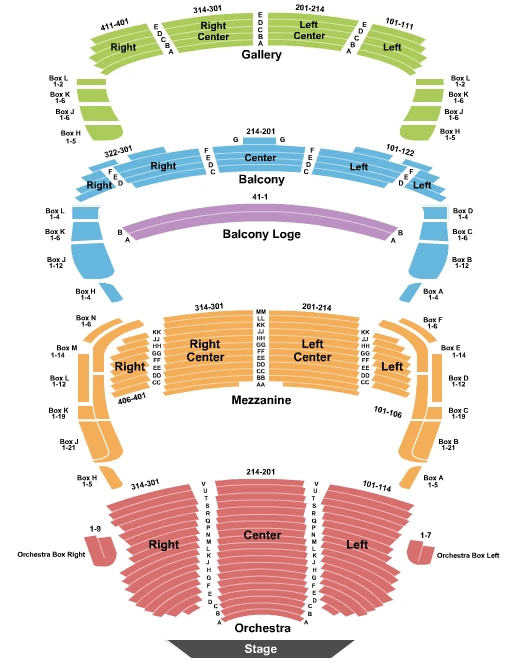 Enlarge seating map ↗
What the partial-view warning really means
At this venue, the chart notes that floors and railings can create sightline problems. That is the kind of warning that matters when you’re deciding whether to accept a partial-view seat. Even a small obstruction can change how much of the stage picture you catch, especially in a show with ensemble movement and staged movement across the full width of the platform.
The safest way to use a partial-view label is to treat it as a heads-up, not a verdict. If you know you can handle a blocked corner, a railing edge, or a slightly altered angle, the value proposition may still work for you. If you are buying for a first-time theatergoer, a child, or someone who gets frustrated by missed action, a clearer view is usually the better call.
When partial-view can be a good choice
Partial-view seats can make sense when your budget is tight, your priority is simply attending this performance, or you care more about the atmosphere than perfect sightlines. They can also be reasonable if you already know this production well and mostly want to hear the score live.
A partial-view seat may be worth considering if you can answer yes to most of these questions:
- you’re comfortable missing a small part of the stage picture;
- you’re okay checking the seat map and reading row notes closely;
- you care more about being at this specific performance than about a perfect center view;
- you’re not trying to watch a child’s very first theater experience from an obstructed angle.
When full-view is worth the extra certainty
Full-view is the better fit when you want the cleanest possible look at staging, especially if this is the one performance you plan to see. It also makes sense if you’re bringing someone who prefers a straightforward, no-surprises theater visit. A clear sightline is often the simplest way to avoid disappointment later.
If you’re comparing sections, think about the whole night, not just the label. A seat with a slightly better angle can make it easier to follow entrances, group numbers, and scenic details. That can matter more than being a little closer if the closer seat comes with a more noticeable obstruction. Use the listing notes, not just the price category, to decide.
Timing and checkout basics for this date
The Ordway lists The Music Man for December 11, 2026 at 7:30 PM, and the production runs about two hours and forty-five minutes including one intermission. That means you should treat the ticket choice as an evening commitment, not just a quick stop. Give yourself enough time to get settled before the curtain rise, and separate the show time from your arrival plans.
Before checkout, review the exact event page, the seat map, and the final total. The listing you see is the one that matters; don’t rely on a different date’s seating example to predict your own view. Also keep admission and any upgrades separate in your mind. A labeled seat type tells you about the view, not every extra that may or may not be part of your order.
- Check the exact row and section note on the listing you’re buying.
- Compare the stage angle with the seat map before you commit.
- If you want less uncertainty, choose the fuller view over the cheaper label.
- If you’re okay with some obstruction, make sure it’s a tradeoff you actually accept, not just a guess.
Where to check next if you still feel unsure
Start with the exact event page for this performance and then open the venue guide if you want a broader sense of where the Ordway places different seating areas. If you’re comparing this show with other Ordway events, related ticket guides can help you think through limited performances, special seating needs, or group buys without assuming every event works the same way.
For the December 11 listing, use the exact event page here: The Music Man at the Ordway ticket page. If you want venue context, see the Ordway Music Theater venue guide. For a nearby example of how seating decisions can change by performance, you may also find Oh, Mary! at the Ordway: Finding Tickets When Your Preferred Performance Is Limited useful.
Before you head out
Frequently Asked Questions
Should I choose a partial-view seat if I’ve never seen the show before?
Usually only if you’re comfortable missing some stage action. For a first viewing, a full-view seat is the safer choice because you’ll better follow the staging, entrances, and ensemble movement. If you do pick partial-view, read the row and section notes closely before checkout. Details ↗
Does the partial-view label guarantee a bad seat?
No. It only tells you there may be some obstruction or a less complete angle. The actual experience depends on the section, row, and what sits between you and the stage. That’s why the seat map and listing notes matter more than the category name alone. Details ↗
Can I assume the December 24 seating example applies to December 11?
No. The December 24 map is only an example that shows how some areas can be labeled partial view. It does not prove the same labels, bands, or exact pricing for December 11. Always check the specific listing for your chosen performance. Details ↗
What should matter most when I compare seat options here?
Start with sightlines, then think about who is going and how much of the stage you want to see clearly. Floors and railings can affect visibility, so a slightly different row may matter more than the section label. Use the exact event page and seat map to decide. Details ↗